Electrolysis is often used for permanent hair removal where LASER fails to remove the hairs. This is typically grey, red, blonde, fine hairs and can be in combination with dark or tanned skin.
What is Electrolysis and how does it permanently remove my hair?
Electrolysis has been in use for permanent hair removal since 1875 and with many, many decades of studies, it has been deemed safe and permanent by the FDA.
Electrolysis can work on almost any hair, regardless of hair or skin colour, since each individual hair is given a specific energy to disable its ability to grow.
*A very basic explanation of how this works, is a thin filament is placed inside the hair follicle of a visible hair.
*The energy is turned on and the follicle structures are damaged by a small amount of electricity delivered by the filament. The skin is left intact.
*The hair is then removed with tweezers.
*The process is repeated with a new hair.
The treated hair follicle is either destroyed or will return thinner depending the stage of the hair cycle and the intensity of the setting.
How fast one can have full permanent clearance of an area depends on the above factors as well as how often one returns to get the next several rounds of hair cycles treated and how much time one schedules in for their appointments.
Book a consultation for more information on how Microscopic Electrolysis could work for you.
Electrolysis can work on almost any hair, regardless of hair or skin colour, since each individual hair is given a specific energy to disable its ability to grow.
*A very basic explanation of how this works, is a thin filament is placed inside the hair follicle of a visible hair.
*The energy is turned on and the follicle structures are damaged by a small amount of electricity delivered by the filament. The skin is left intact.
*The hair is then removed with tweezers.
*The process is repeated with a new hair.
The treated hair follicle is either destroyed or will return thinner depending the stage of the hair cycle and the intensity of the setting.
How fast one can have full permanent clearance of an area depends on the above factors as well as how often one returns to get the next several rounds of hair cycles treated and how much time one schedules in for their appointments.
Book a consultation for more information on how Microscopic Electrolysis could work for you.
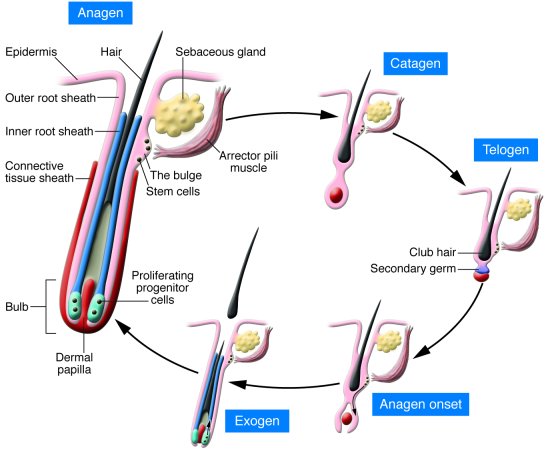
J Clin Invest. 2006;116(1):19-22. https://doi.org/10.1172/JCI27490.
Our hair grows in cycles and repeated treatments is a must to reach one's goal of permanent hair removal.
Our hair grows in cycles and repeated treatments is a must to reach one's goal of permanent hair removal.
Want to see how Electrolysis works? Click here
What makes Microscopic Electrolysis unique?
The hair follicle openings are extremely tiny and so, all Electrologists must use some type of magnification to give the client an effective treatment. The typical range of magnification used for electrolysis is from 1.75txs to 6txs.
Our Surgical microscope's highest magnification is 19txs.
The higher the magnification, the more visible the hairs and their "pores" are. This helps with accuracy, a more effective treatment and less side-effects.
With 19txs magnification, very fine hairs are more visible to the Electrologist and can be treated like never before.
Our Surgical microscope's highest magnification is 19txs.
The higher the magnification, the more visible the hairs and their "pores" are. This helps with accuracy, a more effective treatment and less side-effects.
With 19txs magnification, very fine hairs are more visible to the Electrologist and can be treated like never before.
But why would one even need to treat fine hairs anyways?
It's down to personal preference in which some people may want all the hairs removed from an area. LASER often cannot remove fine hairs and if someone wants permanent results, Electrolysis is the only option left.
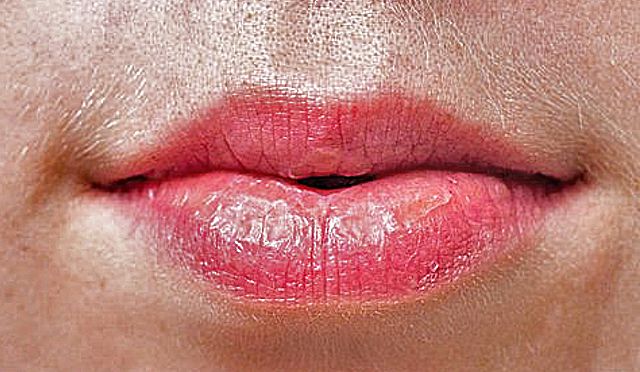
LASER would not be able to treat the fine blonde upper lip hairs in the above example. Microscopic Electrolysis is the most effective choice for permanent hair removal
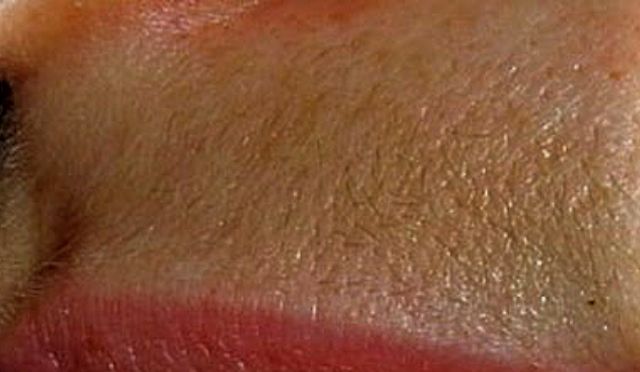
"Shadowing" on the upper lip occurs in certain lighting/photos that appears to look like a moustache. There are some obvious visible hairs that stick out which could be treated with LASER.
With high magnification there are hundreds to thousands of tiny dark hairs that contribute to the "shadowing". These would not be treatable with LASER and only Electrolysis could permanently remove these super fine hairs.
At The Silver Filament, all accessible hairs can safely be treated with high magnification and insulated filaments.
Read on if you want to learn more about Microscopic Electrolysis and the various magnification tools Electrologists use.
With high magnification there are hundreds to thousands of tiny dark hairs that contribute to the "shadowing". These would not be treatable with LASER and only Electrolysis could permanently remove these super fine hairs.
At The Silver Filament, all accessible hairs can safely be treated with high magnification and insulated filaments.
Read on if you want to learn more about Microscopic Electrolysis and the various magnification tools Electrologists use.
Surgical Microscope
At The Silver Filament we use a Surgical Microscope that gives various levels of magnification up to a maximum of 19x!
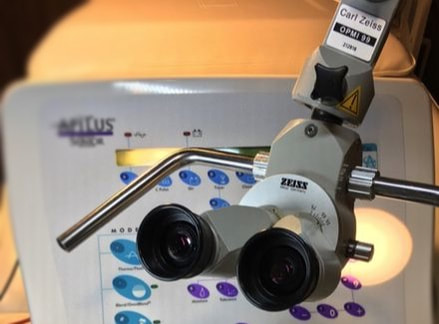
A microscope is similar to binoculars in that each eye looks independently through the magnifiers. The higher the magnification, the smaller the viewing field becomes.
Each eye piece can be adjusted to the vision needs of each eye. This gives stereo vision and depth which shows a crisp view of all accessible hairs no matter how tiny or fine.
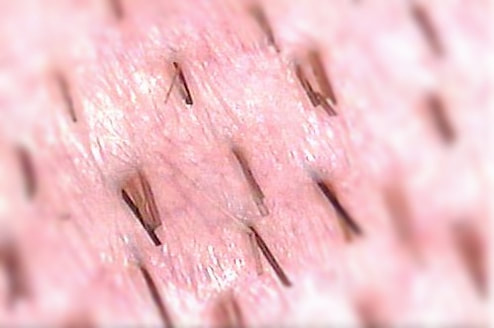
Approximation of coarse to very coarse hairs at 19x magnification
Some benefits from 19x magnification are a safer yet higher hair kill rate for any accessible hair. The skin around the treated hair can be closely watched to keep side-effects at a minimum.
Loupes
At The Silver Filament we use loupes for our Lash Extensions services.

Loupes typically are manufactured between 2.5x magnification up to a max of 6x.
The higher the magnification, the heavier the loupes sits on the face/head. The weight can become too uncomfortable to wear and so, the manufacturer usually limits the magnification to 6x.
High quality Loupes are also like the microscope, in that each eye looks independently through it's magnifier and are adjusted accordingly. This too, results in depth and high quality stereo vision.
Loupes are usually a better option than a magnifier ring lamp when treating finer hairs while monitoring the safety of the skin.
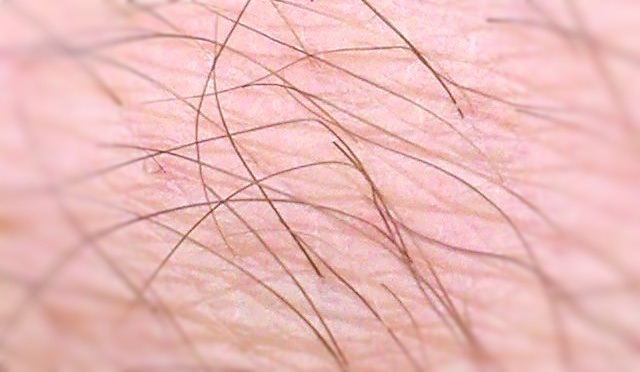
Approximation of fine and medium hairs using 3.5x magnification.
Ring lamp magnifier
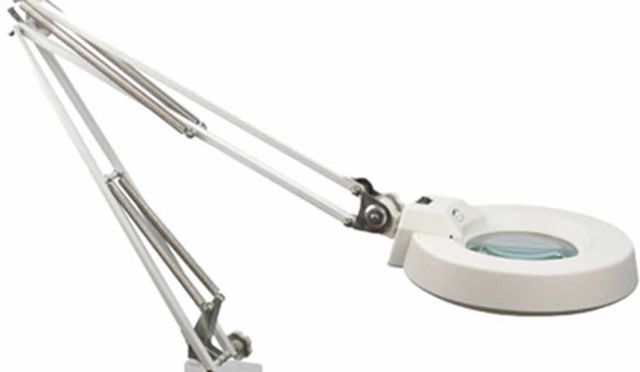
Most ring lamp magnifiers used for Electrolysis can only reach around 1.75x to 2.25x magnification. The higher the magnification glass, the smaller and more distorted the view becomes.
It also can cause eyestrain for the viewer due to both eyes staring through the center of one single magnified glass.
With lower magnification, fine hairs start to become more difficult to see and can get treated incorrectly, which could cause harm to the skin.
It also can cause eyestrain for the viewer due to both eyes staring through the center of one single magnified glass.
With lower magnification, fine hairs start to become more difficult to see and can get treated incorrectly, which could cause harm to the skin.
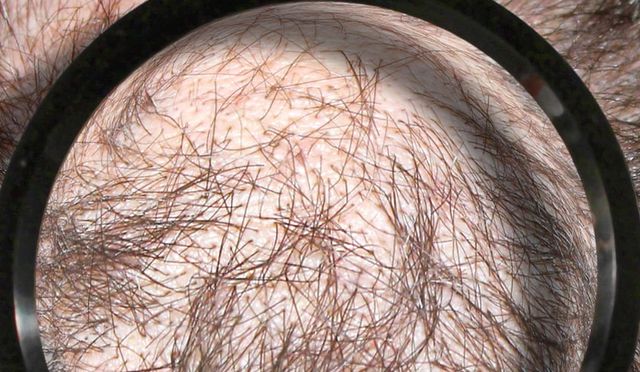
Approximation of 1.5-2x magnification of coarse to very coarse hairs
With ring lamps, there is a larger margin of error when treating finer hairs. So look for a good experienced Electrologist who works with ring lamps and all should be well.